In this guide
The end of a work period is a change in responsibility, not just a time on the clock. A useful transition leaves the next person with a clear starting point: what is complete, what remains open, and who owns the next action. It also respects the employer’s process for relief, reporting, and recording work time.
Look ahead before the final moment
When the workplace process allows, identify open items before the moment you are expected to transition. This is not an instruction to begin closing tasks early or abandon active work. It is a prompt to notice whether anything will need a receiver or a decision before you leave the assignment.
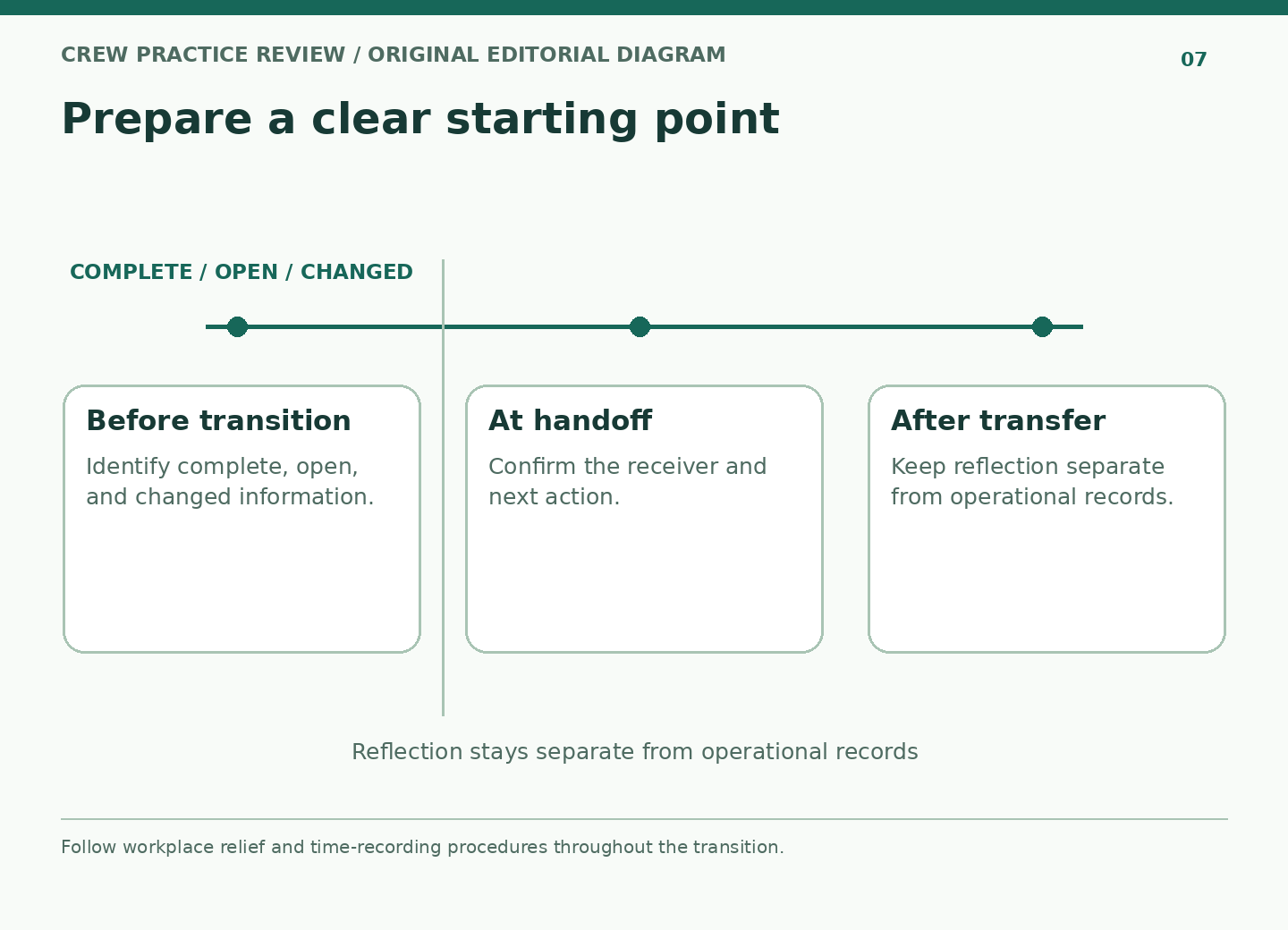
In a hypothetical example, Avery has completed a routine assignment but is still waiting for a response to a guest question. If Avery reports “everything is done,” the next person may not know anyone is waiting. A precise transition says, “My assigned part is complete; one question still needs an authorized answer.” The unfinished item stays visible without turning the whole shift into a failure.
Sort the information into three buckets
- Complete: finished and confirmed through the required process.
- Open: unfinished, waiting, or uncertain.
- Changed: information that makes an earlier understanding outdated.
Do not include a full story for every bucket. State the fact that changes what the receiver should do. “The answer is still pending” matters. A lengthy account of every attempt to get it may not, unless the receiver needs that history to avoid repeating a failed route.
Hazards, health concerns, and urgent issues should already have been reported promptly. They do not belong in a pile of information held until the shift ends. OSHA’s worker-participation guidance supports reporting and follow-through; the specific workplace process determines how the report is made.
Confirm acceptance rather than announcing departure
Ask who is receiving an open item and whether the transfer has been accepted under the workplace procedure. “I told someone nearby” is not sufficient evidence that the next action has an owner. If the intended receiver is unavailable, ask the responsible supervisor how to handle the transition.
Avery’s hypothetical confirmation might be, “Are you taking this question from here, or should I check with the supervisor for another receiver?” That is a practical ownership question. It does not authorize Avery to assign duties, extend a shift independently, or leave before the required relief process.
If the receiver discovers a missing detail, treat the question as part of completing the transfer. Answer what you know and distinguish it from what still needs checking. A brief correction before the transition is more useful than leaving the next person to reconstruct your assumptions. If the missing information requires another decision-maker, preserve that open status and follow the approved route for obtaining the answer.
Keep work-time recording accurate
Do not treat a required handoff or work-related wrap-up as a reason to work off the clock. Ask how the employer wants that time recorded. The Department of Labor’s hours-worked fact sheet explains that work an employer permits can count as work time. Individual circumstances and applicable law affect specific pay questions.
This guide does not tell you to stay beyond authorization or promise that a shift will finish at a particular minute. It tells you to make open work and time questions visible to the responsible person instead of resolving them privately through unpaid work or an unconfirmed departure.
Separate operational notes from personal reflection
Operational facts belong in approved workplace channels. A personal learning note can remain general: “I need to name the receiver sooner when a question remains open.” Do not take customer details, private records, or internal documents home as study material. See the learning-log guide for a small privacy-safe format.
For the next transition, ask yourself: What is genuinely complete? What is still open? What changed? Who has accepted the next action? Then follow the actual relief and reporting process. A clear starting point for the next person is more valuable than a polished claim that nothing remains unfinished.
Sources and scope
Sources checked October 4, 2026. Examples and methods are original editorial work.
- U.S. Department of Labor: Fact Sheet 22, Hours Worked — General federal work-time and training-time context.
- OSHA: Worker Participation — Safety-program reporting and follow-through recommendations.