In this guide
You do not need to solve a concern before reporting it. An associate may notice something unexpected without knowing whether the cause is equipment, process, communication, or a misunderstanding. The useful first step is a clear observation and an appropriate request for help. Waiting for a complete theory can delay the person who is trained and authorized to assess it.
Separate observation from diagnosis
“The usual information is missing” is an observation. “Someone ignored the rules” is a conclusion about cause and intent. “I have not been shown this task” is an observation about your preparation. “This task is always unsafe” is a much broader claim. Report what you can support without weakening a genuine concern through vague language.
In a hypothetical example, an associate notices that the instruction available to them does not match the task they have been asked to perform. They do not attempt the unfamiliar step to find out whether it works. They tell the responsible person: “This is different from what I was shown, and I need the correct instruction before continuing that part.” The example deliberately stops before any machine, chemical, or food-handling procedure.
Choose the route by the consequence of waiting
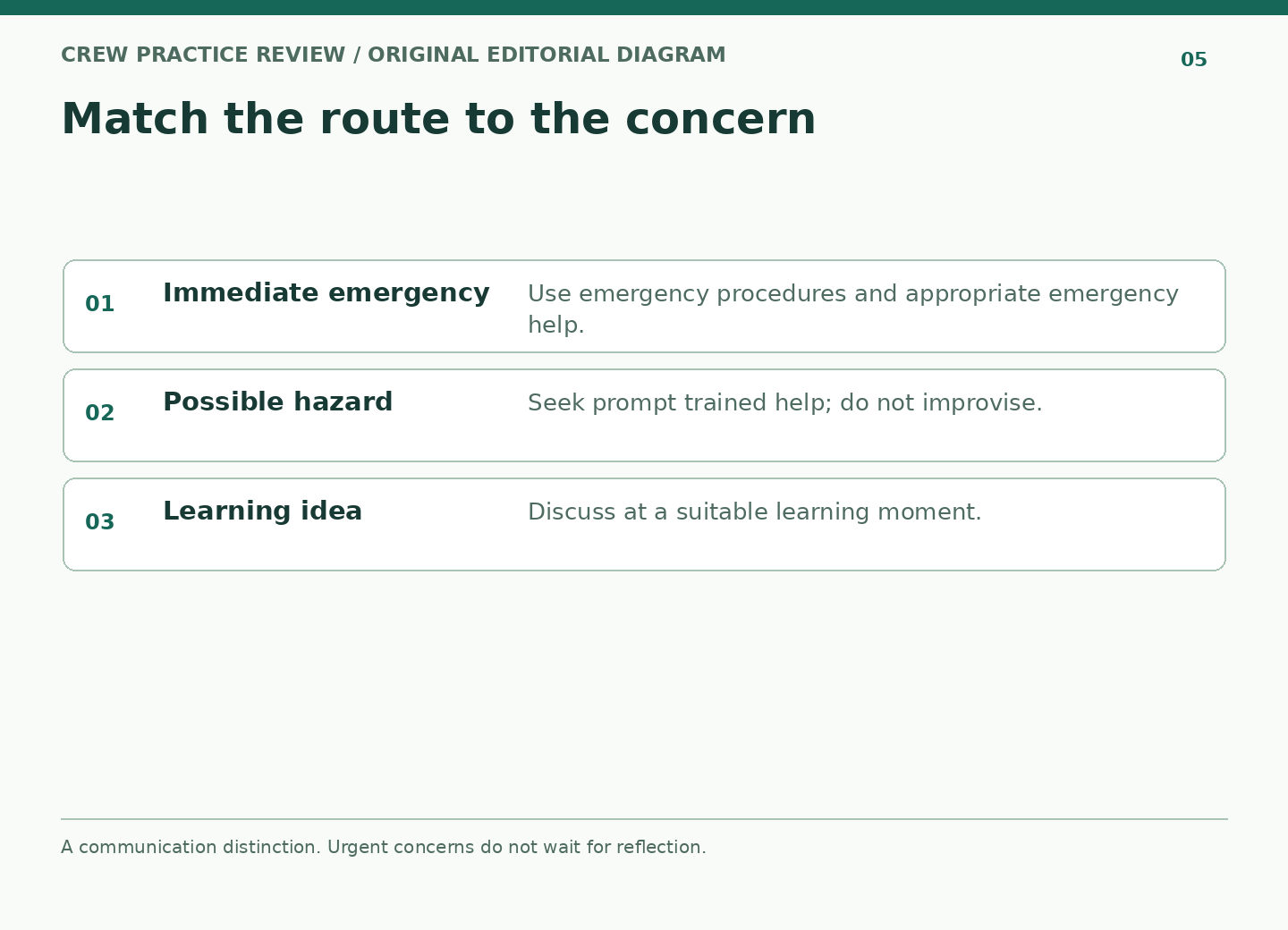
For an immediate emergency, follow the workplace emergency process and contact emergency services as appropriate. For a possible hazard or a task you cannot safely perform with your current instruction, seek prompt assistance through the workplace’s safety route. For an ordinary improvement idea, choose a suitable discussion point. These are different kinds of communication, not three reasons to wait.
OSHA’s restaurant material identifies common hazards and emphasizes training. OSHA’s worker-rights page explains how workers can raise safety concerns and find federal or State Plan assistance. An article cannot determine the legal status of a specific incident or replace emergency instruction.
Make the first report short and usable
State where the concern is, what you directly observed, and what help is needed. Mention whether the condition is ongoing. If you do not know the cause, say so. “I noticed X at this location; I do not know why; I need the responsible person to check it” is a useful general pattern. Use the actual reporting method provided at work.
Avoid taking photos, collecting private records, or sharing a story in an informal chat merely to make the report seem more convincing. Required incident documentation belongs in authorized channels. You can give an immediate verbal report without first creating a personal archive. Do not place yourself or anyone else at risk to gather evidence.
Do not decide food or health questions by intuition
For an employee-health or food-safety uncertainty, use the employer’s trained reporting process promptly. Do not decide that a symptom is irrelevant, that an item is safe, or that a condition can be ignored because the shift is busy. Communicate the necessary facts privately to the appropriate person rather than discussing someone’s health with the whole crew.
The FDA Food Code is a model used by jurisdictions, not automatically the governing rule everywhere. FDA’s employee-health tool directs users to applicable local health codes. Those sources explain why local instruction matters; they do not let this publication clear a person to work or make a food-safety decision.
Confirm that the concern reached the right person
After reporting, distinguish “heard” from “resolved.” Ask who is handling the next step when that is unclear. If the condition changes, update the report. If an urgent concern remains unaddressed, use the next appropriate safety or emergency route rather than assuming silence means approval. See handoff ownership for the communication distinction.
Your checklist is practical: report the observation; name uncertainty honestly; explain why help is needed now; use the right channel; avoid an improvised remedy; confirm the next owner. A concern may turn out to have a simple explanation. Raising it accurately and in good faith is still different from pretending you knew the answer before it was checked.
Sources and scope
Sources checked October 4, 2026. Examples and methods are original editorial work.
- OSHA: Young Worker Safety in Restaurants — General restaurant hazards and understandable safety training.
- OSHA: Worker Rights and Protections — Public safety-concern routes and general worker protections.
- FDA Food Code — Model-code status; local adoption is not assumed.
- FDA Employee Health Policy Tool — Employee-health policy context; applicable local codes govern.